
A workplace shift is an operational project, not just a transport job. The right office movers Auckland businesses choose should help coordinate timing, people, assets and building access so the changeover is controlled from the first pickup to final placement. For an office relocation Auckland project, early planning also gives managers a clearer view of what must stay functional, what can be packed first, and what needs special handling.
Good commercial moving preparation reduces avoidable disruption by matching the move sequence to business priorities. That means understanding the current site, the destination, the volume being shifted and the people responsible for decisions before anyone starts carrying items.
Build the Office Relocation Plan Before Moving Day
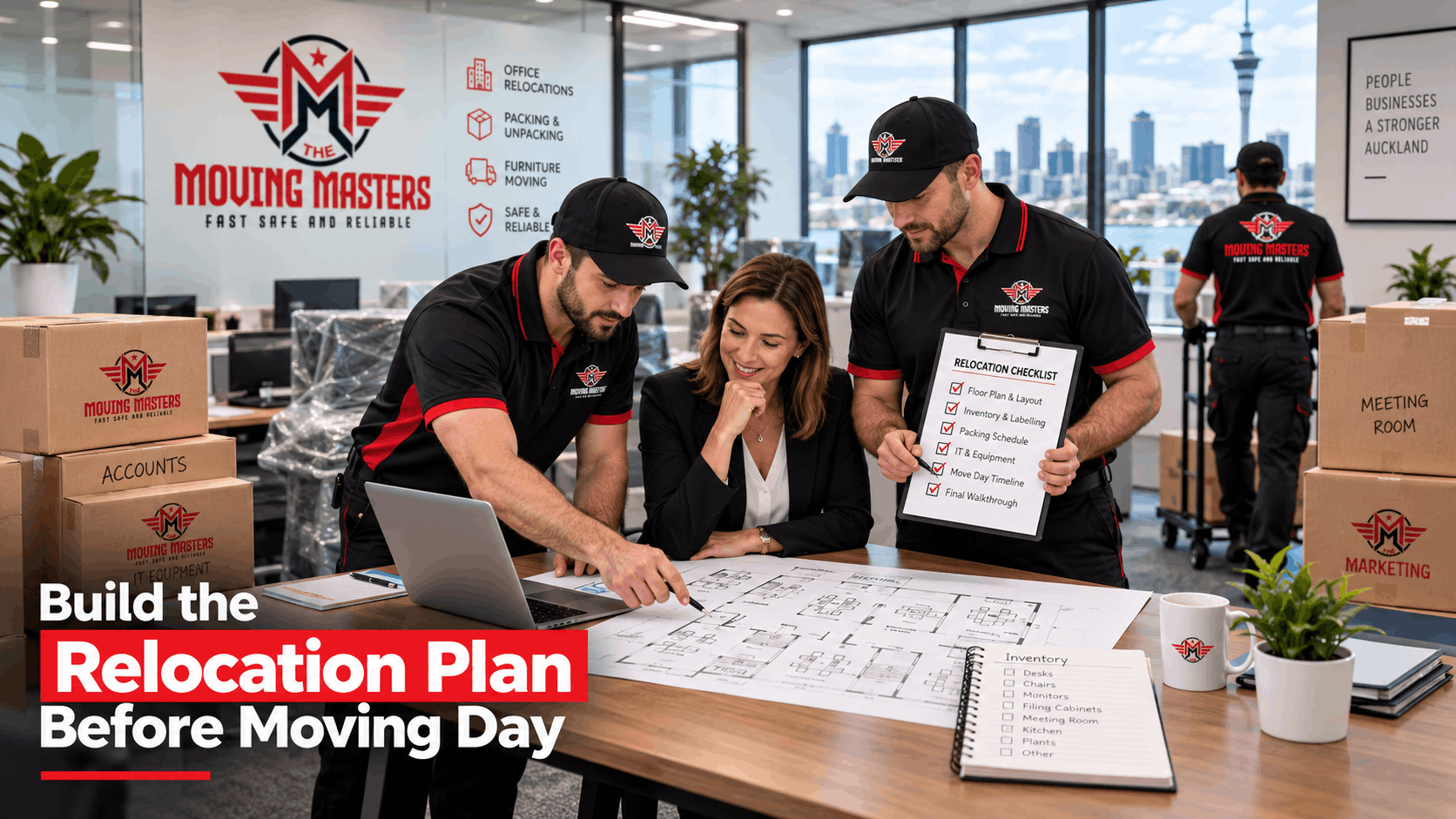
Define the Move Scope, Inventory and Business Priorities
Start by deciding exactly what is going, what is staying, what will be disposed of and what must remain available until late in the process. A useful inventory should identify furniture, equipment, boxed records, desk setups and any high-value or awkward pieces. It should also show which departments need to become operational first.
For a larger office relocation Auckland project, map the work in phases rather than treating every room as one load. Separate essential systems from low-priority storage, identify items that need dismantling, and confirm who approves changes on the day. This approach gives the team a practical sequence and helps prevent important assets from being buried behind low-priority cartons. For larger office relocations, define a department-by-department handover so each area has a clear owner. The office move should also identify furniture that needs early disassembly and equipment that cannot be unavailable until late in the day. That extra planning makes dependencies visible before physical work begins.
Confirm Access, Parking, Lifts and the New Floor Plan
Site conditions can change the pace of an office move even when the distance between addresses is short. Confirm access at both properties, including loading zones, lift bookings, parking restrictions, doorway widths and any instructions from building managers. A CBD property may have very different vehicle and lift constraints from a city fringe workspace, so these details should be checked before the booking is finalised.
Share floor plans or a clearly marked destination layout before departure. Number rooms, departments or zones, then use the same labels on boxes and larger pieces. If a truck can stop close to the correct entrance and the route to each department is clear, labour time is less likely to be lost to repeated carrying, waiting or re-direction. Good planning here also makes the transfer easier to control once several people are working at once. Auckland buildings can differ significantly in entry routes and shared facilities, so site-specific notes are more useful than assumptions.
Assess Whether an Office Mover Can Handle Commercial Work
Check Crew Experience, Accountability and Who Actually Does the Work
A provider should be able to explain how it organises a business shift, not simply say that it can move things. Ask who will lead the moving team, how instructions are communicated and whether the moving crew arriving on the day is part of the same service or is subcontracted. Clear responsibility matters when priorities change or an unexpected site issue needs a quick decision.
Look for trained movers who understand the work expected of commercial movers, such as labelled department zones, staged entry, sensitive electronics and coordinated placement. Trained crews should also know when an item needs two-person lifting, extra wrapping or a different route through the building. A direct service model can make communication simpler because responsibility for instructions stays with the provider that accepted the job. Movers should receive the same labelled instructions as the coordinator, including any special handling notes.
Check Trucks, Protective Gear and Moving Systems
Vehicle choice and preparation affect both efficiency and risk. Ask whether fit-for-purpose trucks are available for the volume and type of load, and whether the team brings proper equipment such as trolleys, blankets, straps and tie-downs. Furniture trucks should have enough usable space and restraint points to keep different item types stable in transit.
The truck should be packed in a deliberate order. Heavy pieces need a secure base; delicate items should not be trapped beneath dense loads; and priority items should be positioned so they can be reached at the right stage. A second truck may sometimes be more practical than overfilling one vehicle or creating repeated trips, but the right choice depends on the actual scope. The aim is organised loading rather than simply filling space as quickly as possible. For commercial moving, truck capacity should match both the volume and the practical route through the premises. Movers should also be able to explain how commercial site constraints affect their setup.
Protect Furniture, IT Equipment and High-Risk Items
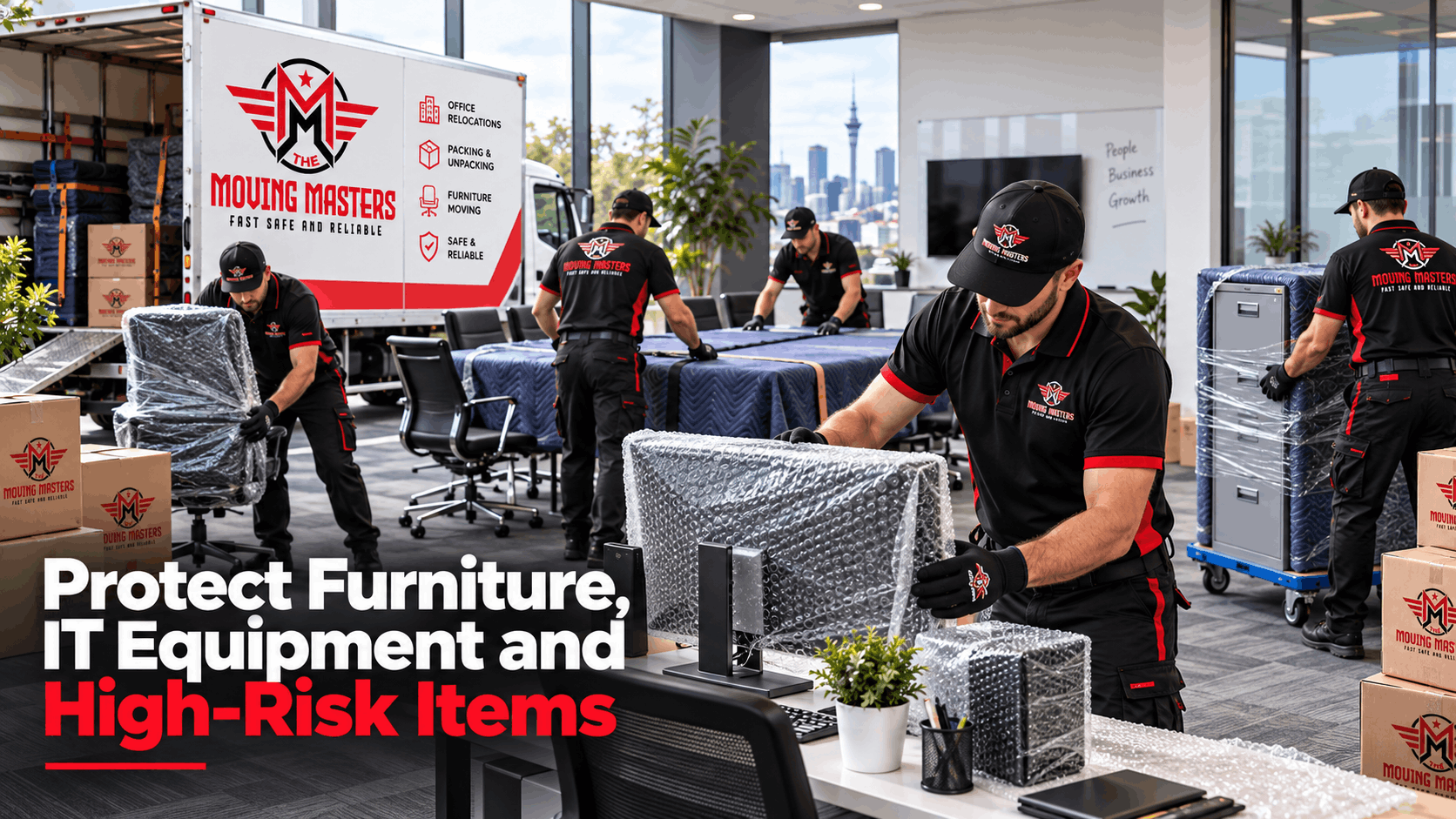
Move Workstations, Screens, Computers and Filing Equipment Safely
Different assets need different preparation. Furniture such as desks, chairs and boardroom tables may need wrapping, dismantling or protected edges. Equipment such as printers, desktop computers and other electronics should be disconnected, labelled and packed so cables and accessories remain associated with the correct user or department.
For office moving, workstations can be given a location code that matches the destination layout. Screens need rigid protection against pressure and impact, while loose drawers and doors on filing cabinets should be secured before handling. Filing systems may also require controlled labelling so confidential or operational records do not become mixed during transit.
Avoid putting small electronic parts into unmarked cartons. Use labels that identify the destination zone and the person or function that owns the contents. Movers should follow a consistent handling method for furniture and equipment that need to stay grouped. Where packing help is needed, The Moving Masters offers packing and unpacking support for business contents alongside its wider moving services.
Plan Separately for Heavy, Fragile and Awkward Assets
Some items deserve their own method statement within the job. Safes, marble tops, statues and specialist devices can create different lifting, route and securing requirements. Confirm dimensions, approximate weight, stair or lift constraints and whether any part can be safely separated before transport.
Heavy furniture should be positioned so weight distribution inside the truck remains controlled. Truck loading balance matters because a poorly arranged load can shift, restrict unloading order or place excess pressure on more delicate pieces. Fragile items need suitable protection, while awkward shapes may need extra clearance through doors and corners. Protection should continue from lift-off through final placement, especially where furniture surfaces or commercial assets can contact hard edges. A documented handling method also helps the team avoid improvising around unusual pieces. Proper equipment should be selected in advance for the item itself, not chosen only after a lifting problem appears.
Schedule the Move to Minimise Business Downtime
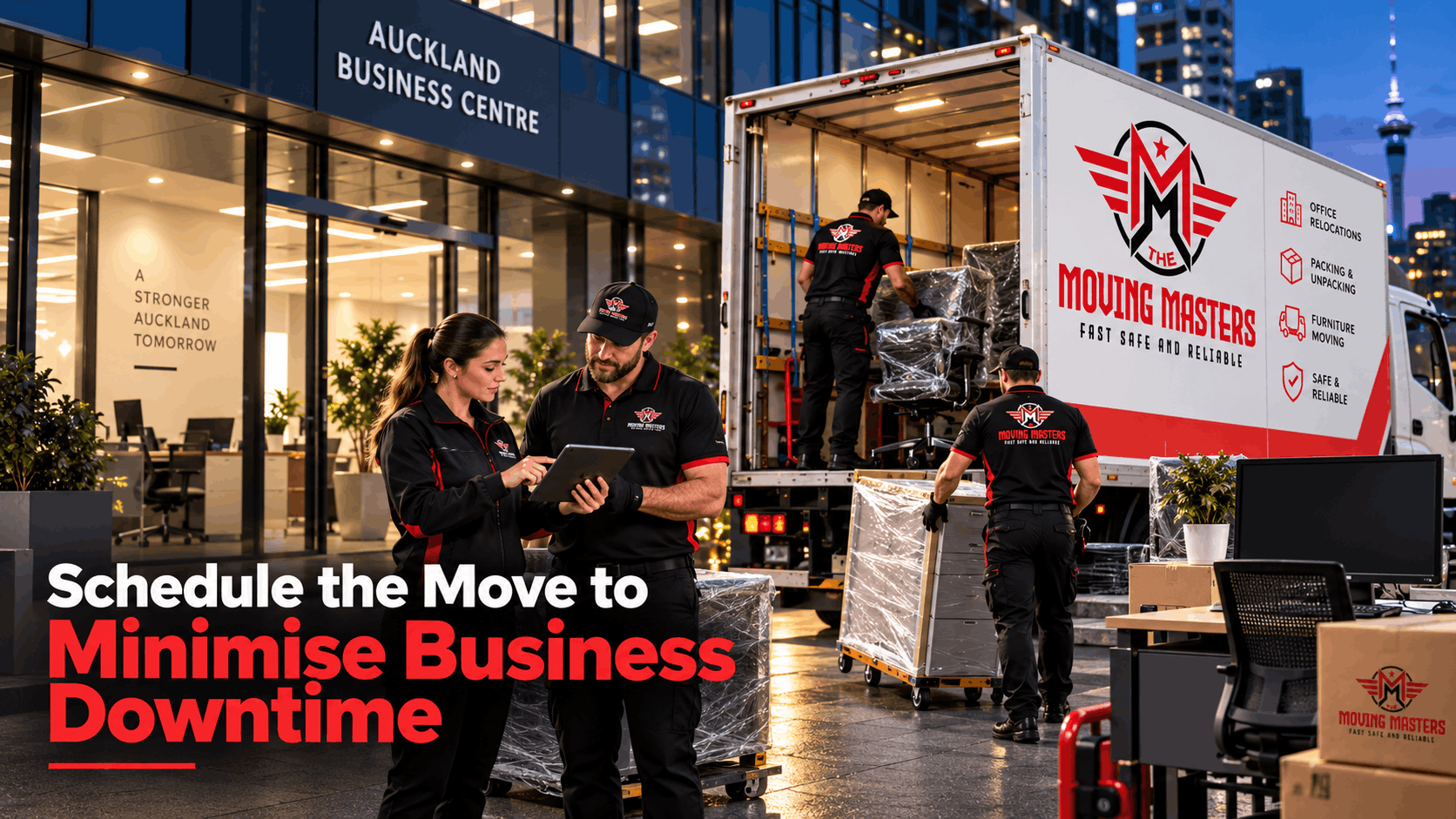
Decide Between a Staged, After-Hours or Weekend Move
Timing should follow operational priorities. A staged move can keep part of the business functioning while another area is transferred, but it creates more handovers and requires clear sequencing. An evening option may reduce conflict with staff and visitors, while moving at the weekend can provide a longer uninterrupted window where building arrangements and service availability allow.
The best schedule is the one that matches the organisation’s actual dependencies. Consider when phones, customer service, files, stock, shared devices and key people must be available. Some teams may temporarily use remote work while essential rooms are prepared. Whatever timing is selected, build in realistic allowances for lifts, site checks and internal sign-off rather than assuming every step will run without interruption.
Assign Internal Responsibilities and One Moving-Day Contact
Choose one authorised contact who can answer questions, approve minor changes and coordinate staff coordination with the service lead. Too many decision-makers can slow the job because instructions may conflict. Avoidable disruption can also occur when staff give competing directions to movers. Department representatives can still prepare their areas, but one person should own final decisions about priorities and placement.
Before moving day, confirm who shuts down technology, who checks rooms, who controls keys or passes, and who receives the first delivery at the destination. This simple structure gives the moving team a reliable source of instructions and helps staff understand where responsibility changes from internal preparation to physical transfer.
Control Office Moving Costs Without Choosing on Price Alone
Understand What Actually Drives the Final Moving Cost
Final charges are influenced by more than distance. Labour time can increase when parking is distant, lifts are shared, corridors are long, items are not ready, or the truck must be moved repeatedly. Packing needs, dismantling, reassembly, heavy-item work and the number of trips can also affect the final cost.
Ask how time is measured, what an hourly rate includes and which circumstances can add billable time. A cheaper headline rate may not deliver better value if the job is under-resourced or badly sequenced. Accurate scope information allows a provider to propose a more realistic approach and helps the business budget around operational needs rather than an incomplete estimate.
Compare Quotes, Crew Quality and Accountability Together
A useful proposal should reflect the actual job: locations, volume, dates, vehicle needs, special items and relevant site conditions. Compare what is included rather than looking only at the bottom-line figure. Confirm the planned team size, whether specialist requirements have been discussed and who is responsible for communication if circumstances change.
Reliability also depends on preparation. Ask how the provider records instructions, confirms timing and manages changes. The second point to assess is whether the person coordinating the booking can clearly explain what happens before arrival, during the job and at handover. That gives decision-makers more useful information than price alone.
Organise Moving-Day Loading, Transport and Setup
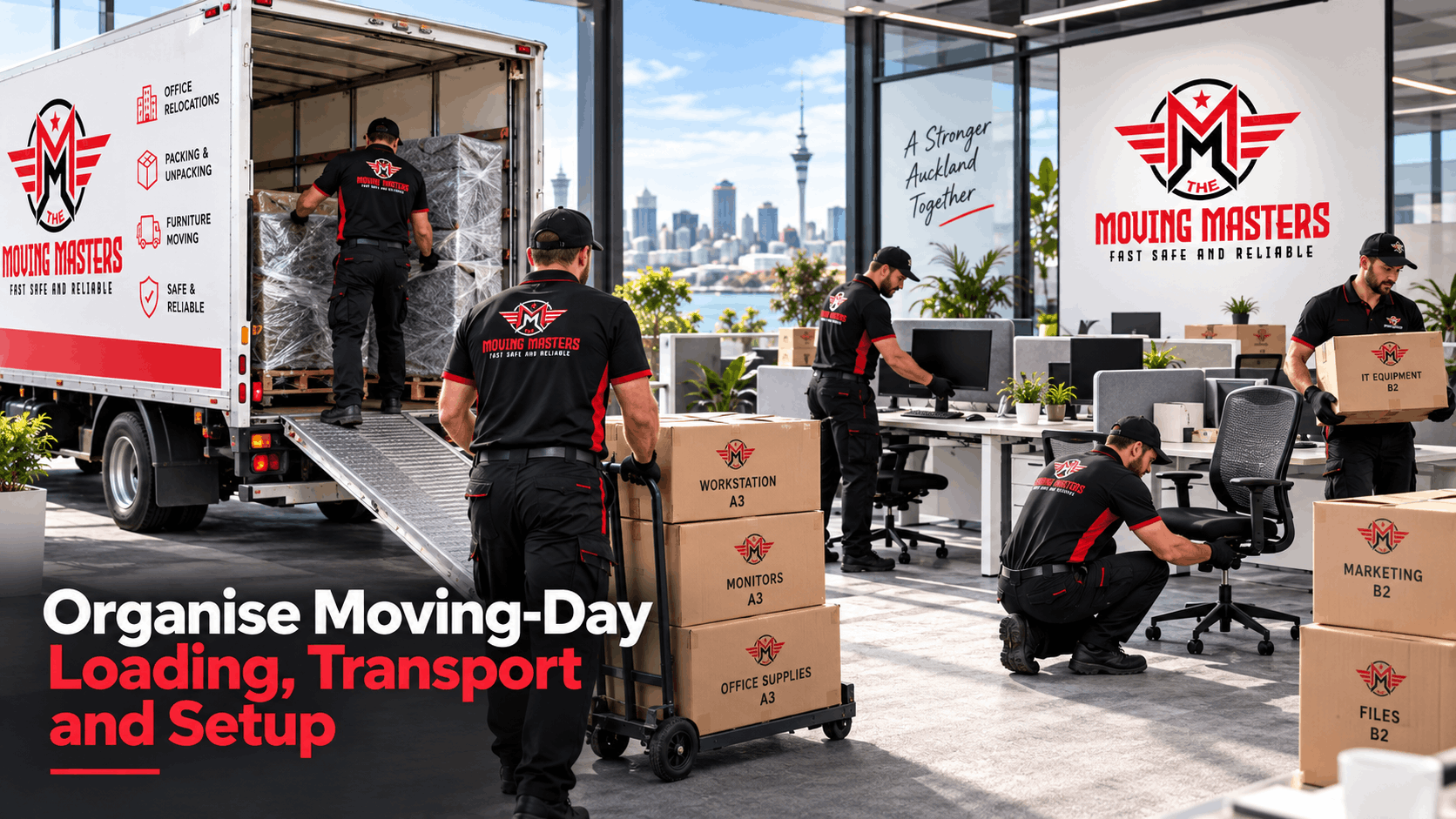
Label, Load and Unload in the Right Operational Sequence
Good labelling turns the destination into a planned setup rather than a search exercise. Mark cartons and furniture with department, room and priority codes. The first items needed to restart work should be easy to identify, while lower-priority pieces can travel deeper in the load.
During loading, keep related assets together where practical and protect surfaces that could rub against each other. Furniture with removable parts should stay clearly matched, and the handling sequence should preserve labels and room codes. Furniture transport works best when the unload sequence has been considered before the doors close. A carefully arranged truck lets the team remove the right items for each zone instead of unloading everything into a temporary pile. This also reduces repeated carrying and helps keep circulation areas clearer.
A separate truck may be appropriate for unusually bulky or sensitive items when the scope supports it. The decision should come from the item list, route and required furniture transport sequence rather than habit.
Reassemble and Confirm the New Office Is Operational
Arrival is not finished when the last box crosses the doorway. Furniture should be positioned to the agreed layout, and equipment should reach the correct user or department before unpacking spreads across the site. Where agreed, desks or storage pieces can then be reassembled in their assigned locations.
Run a simple handover check. Confirm priority areas are accessible, screens and peripherals are with the right stations, and any visible faults or damaged items are recorded promptly. Internal IT staff or contractors should test networked systems and other technology that the mover is not responsible for commissioning. The goal is to leave the new office organized enough for the business to continue its own setup without unnecessary re-sorting.
Auckland Office Relocation Checklist
Before Moving Week
- Finalize the inventory and mark items that will not travel.
- Confirm access details, parking, lift arrangements and contact names at both sites.
- Circulate destination layouts or zone references to department leads.
- Complete packing for non-essential contents and mark priority cartons.
- Confirm staff responsibilities, technology shutdown tasks and key handover arrangements.
- Recheck the office relocation Auckland schedule with the provider and building contacts.
On Moving Day
- Give the service crew one authorised contact for decisions.
- Keep entrances and internal routes clear before loading starts.
- Check protection is in place on delicate surfaces and vulnerable items.
- Keep priority items grouped and make sure labels remain visible.
- Confirm each truck is being filled according to the planned unload order.
- Record unexpected changes so the destination team receives updated instructions.
After Arrival
- Direct unloading by room, department and priority.
- Confirm furniture is in the intended zones before full setup begins.
- Match equipment and accessories to the correct teams.
- Check monitors and other delicate pieces for visible damage.
- Record faults, missing labels or misplaced cartons for follow-up.
- Complete workstation setup and operational checks with the relevant internal staff.
Office Movers Auckland FAQs
How Far Ahead Should an Auckland Office Move Be Booked?
Book as early as practical once dates, premises and major requirements are known. Earlier booking gives more flexibility to coordinate building access, staff availability and service scheduling. More complex office moves may need extra preparation because they involve multiple departments, restricted entry or specialist assets.
Can the Move Be Completed After Hours or on a Weekend?
Potentially, yes, depending on provider availability and the rules or access arrangements at both buildings. Discuss timing early so the move can be planned around lifts, security, keys and internal staffing rather than assuming the premises will be fully accessible outside standard hours.
What Should Be Moved Separately From Normal Office Furniture?
Fragile electronics, confidential records, hazardous or restricted materials, personal valuables and unusually heavy or delicate items may need separate arrangements. Tell the provider about these items during planning so suitable packing, handling and transport methods can be agreed before the day.
What Should Businesses Ask an Office Moving Company Before Accepting a Quote?
Ask who will complete the work, what is included, how timing is charged, which vehicle is planned, what information is needed about both sites, and how special items will be managed. A suitable provider should be able to explain the proposed process in clear operational terms.
Choosing the Right Relocation Approach
A successful office relocation Auckland project comes from matching preparation, people and resources to the real constraints of the business. Look beyond the headline rate and assess whether the provider understands your sites, critical assets, schedule and restart priorities. The Moving Masters provides a verified commercial service and a dedicated office service for Auckland businesses, with planning, packing, transport and placement options described on its website.
If you are comparing office movers Auckland options, share the two locations, item volume, timing, access notes and any specialist requirements with The Moving Masters and request a quote based on the actual scope.